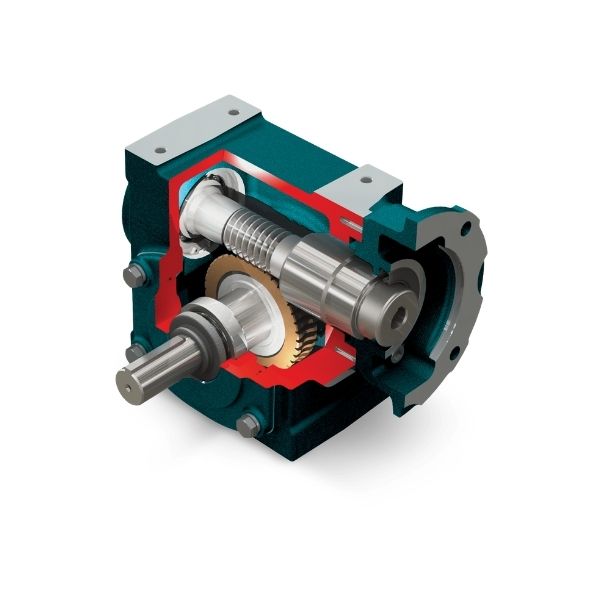
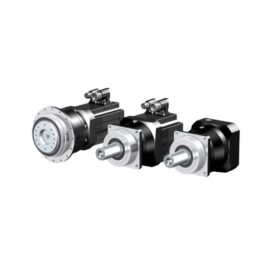
Worm gearboxes transmit power between shafts at 90 degrees using a helical worm screw meshing with a worm wheel. The single-stage reduction ratio achievable - typically 5:1 to 100:1 - is far higher than possible in a single helical gear stage, enabling compact drive units where high reduction in minimum space is required. The inherent self-locking characteristic at higher reduction ratios means the drive holds its position when power is removed - a valuable safety feature in lifting, positioning, and material handling applications. Transmission efficiency is lower than helical equivalents - typically 50-90% depending on ratio, lead angle, and lubrication - requiring attention to thermal rating in continuous-duty applications. The sliding contact at the worm-wheel interface generates more heat per unit of transmitted power than rolling contact gear types. Bronze worm wheels with hardened steel worms are standard - the bronze minimises friction and provides a sacrificial wear surface protecting the hardened worm. Worm gearboxes are available in solid input shaft versions for direct motor coupling, hollow shaft versions for shaft-mounted installation, and with flange motor mounting for integrated drive units. Housing materials are typically die-cast aluminium for smaller units and cast iron for larger designs. Universal mounting positions allow installation in any orientation. Worm gearboxes are specified for material handling conveyor gate drives, packaging machine timing drives, elevator and escalator auxiliary drives, gate and sluice valve actuators, self-locking positioning mechanisms, solar tracker drives, and all applications requiring compact high-ratio right-angle drives with load-holding capability where worm gearbox efficiency is acceptable.