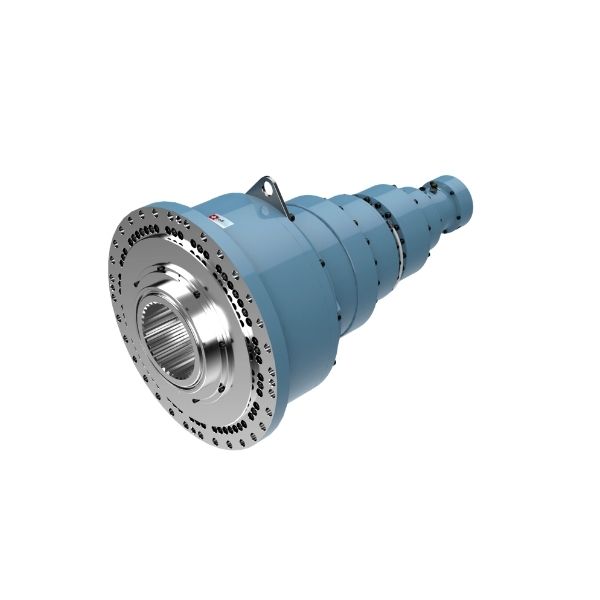
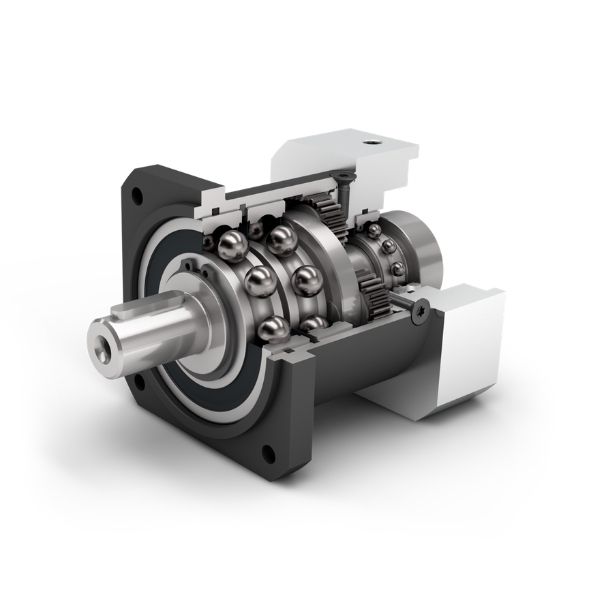
Planetary gearboxes distribute load across multiple planet gears simultaneously - three, four, or five planets sharing the transmitted torque between sun gear and ring gear. This multi-path load sharing dramatically increases torque capacity per unit volume compared to parallel-axis gear types, making planetary gearboxes the undisputed choice where the highest torque density in the smallest envelope is the design requirement. In addition to torque density, high-quality planetary gearboxes deliver low backlash (arc-minute levels in precision servo variants), high torsional stiffness, and coaxial input/output arrangement - all critical characteristics for servo motor output stages. Backlash specifications in servo planetary gearboxes typically range from less than 1 arc-minute (premium) to less than 3 arc-minutes (standard) - far lower than helical or worm alternatives. Single-stage ratios of 3:1 to 10:1 and multi-stage ratios to 100:1 or higher are available. Flange-mount and shaft-mount output configurations connect to driven machinery. Input flanges match IEC servo motor frame sizes for direct servo integration. Efficiency per stage is typically 97-98% even at high reduction ratios - superior to worm alternatives. Planetary gearboxes are the standard output stage for servo motors on CNC machine axes, packaging machine servo drives, robotic joint reduction, precision indexing table drives, pick-and-place automation, pharmaceutical filling machine drives, and wind turbine pitch control systems - wherever compact size, low backlash, high stiffness, and high torque density are simultaneously required.