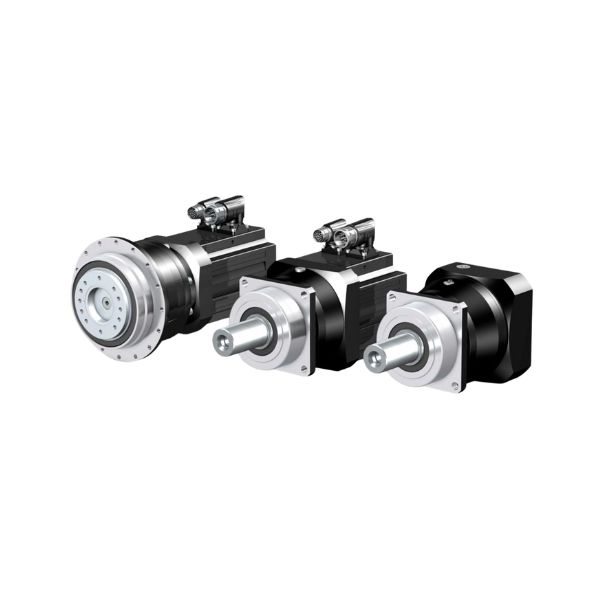
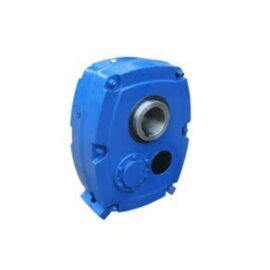
Servo gearboxes - also called precision planetary gearboxes or servo reducers - are designed specifically to interface between servo motors and machine axes requiring the lowest possible backlash, highest torsional stiffness, and most accurate, repeatable positioning. Standard industrial planetary gearboxes use gear clearances optimised for efficiency and load distribution, resulting in backlash of 5-15 arc-minutes. Servo gearboxes address this through precision ground gear teeth, pre-loaded planet gear sets, and tightly controlled assembly clearances. Premium servo gearboxes achieve backlash below 1 arc-minute (ultra-precision), 1-3 arc-minutes (precision), and 3-8 arc-minutes (standard servo grade). Torsional stiffness specifications directly affect positioning repeatability under reversing loads - a critical parameter for CNC machines and robots where gearbox compliance contributes to axis contouring error and positional accuracy at speed. Servo gearbox input flanges match IEC servo motor frame standards for synchronous single-stage mounting without a shaft coupling. Output configurations include solid shaft, hollow shaft, and output flange variants for different driven axis connection methods. Axial and radial output shaft load ratings must be matched to driven axis bearing loads to avoid premature output bearing failure. Servo gearboxes are specified on every CNC machine servo axis, industrial robot joint reduction stages, precision indexing table drives, flying shear and cut-to-length systems, packaging machine registration drives, and high-dynamic pick-and-place automation where backlash and stiffness directly determine achievable positioning accuracy and motion quality.