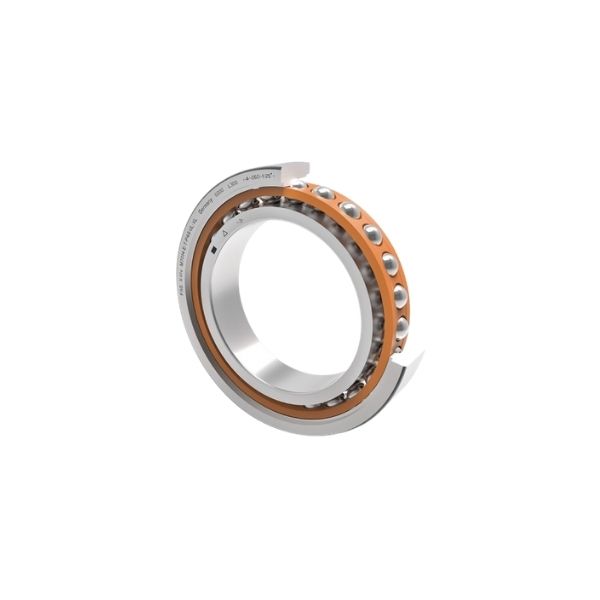
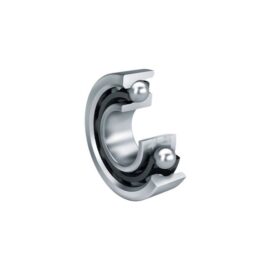
Spindle bearings are single-row angular contact ball bearings manufactured to very tight dimensional and running accuracy tolerances - ABEC 7 (P5) and ABEC 9 (P4 or P2) precision grades - for direct use in machine tool spindles and precision rotating equipment. These tolerances control bore roundness, outer diameter roundness, raceway geometry, and running accuracy: ABEC 7 achieves 5 micron inner ring runout; ABEC 9 achieves 2 micron or better. Spindle bearings are available as universally matchable sets - each bearing is ground to a tolerance allowing any combination of face-to-face, back-to-back, or tandem mounting with controlled preload and equal load sharing. Contact angles of 15, 25, and 40 degrees support different speed/load trade-offs within the same bearing series. Ceramic ball variants with silicon nitride balls reduce centrifugal forces at high speed, enabling up to 25% improvement in limiting speed, and increase stiffness compared to steel ball equivalents. Lubrication methods range from standard grease packing for moderate speeds, to oil-air lubrication systems delivering precisely metered oil quantities for spindles running at high dnm values. Preload selection - light, medium, or heavy - must match the spindle stiffness and dynamic load requirements of the cutting application. Spindle bearings are the fundamental precision component in CNC machining centre, milling, turning, grinding, and jig boring spindles. Selection, preload, and installation quality directly determine the achievable part accuracy, surface finish quality, and spindle bearing life of the machine tool. They should only be specified, installed, and preloaded by personnel with specific machine tool spindle experience.