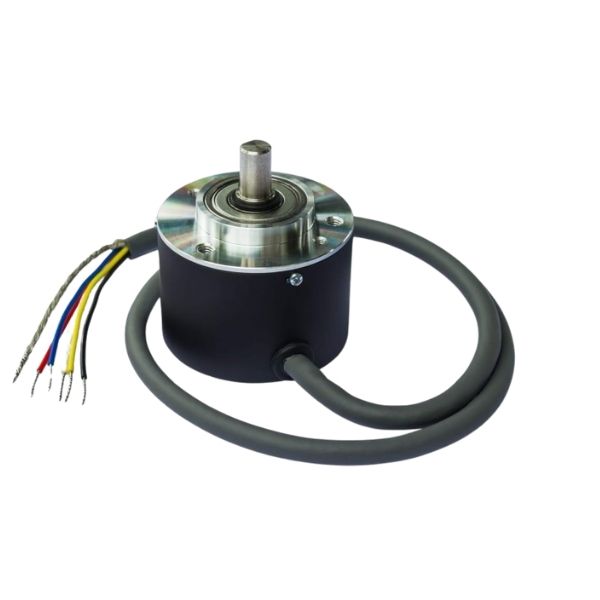
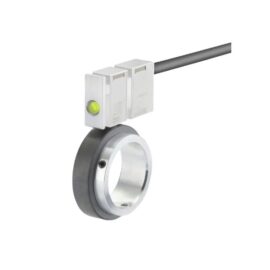
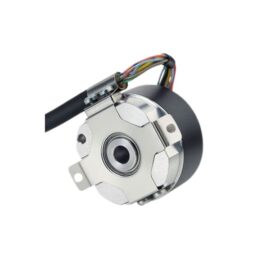
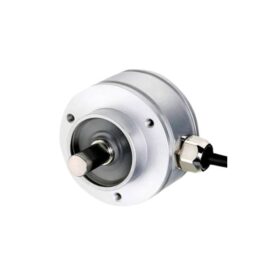
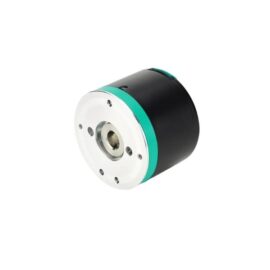
Optical incremental encoders use a precision glass or metal code disc with etched gratings and a light source-detector pair to generate high-accuracy pulse output. As the disc rotates, the alternating transparent and opaque sectors interrupt the light beam, producing clean, high-resolution digital signals. This optical sensing principle delivers superior resolution, accuracy, and signal quality compared to magnetic alternatives. Resolutions range from 100 to 65,536 PPR in standard products, with higher resolution achievable through interpolation within the signal processing circuitry. Output signals include A/B/Z in HTL, TTL/RS422 differential, and SinCos analogue formats. SinCos output is particularly important for CNC and servo drive applications requiring high interpolation factors for smooth motion at low speeds and sub-micron position resolution. Optical encoders require a reasonably clean environment - they are not suitable where oil mist, condensation, or heavy contamination can deposit on the code disc. Housings in aluminium or stainless steel with IP64 to IP67 sealing and precision ball bearings provide reliable service life in suitable environments. Optical incremental encoders are preferred wherever resolution, signal quality, and measurement accuracy are the primary criteria: CNC machine tool axes, precision grinding and milling spindles, servo feedback in packaging machines, high-speed printing registration, and laboratory or test equipment. Where environment is too harsh for optical sensing, magnetic incremental encoders provide a robust alternative with lower resolution.