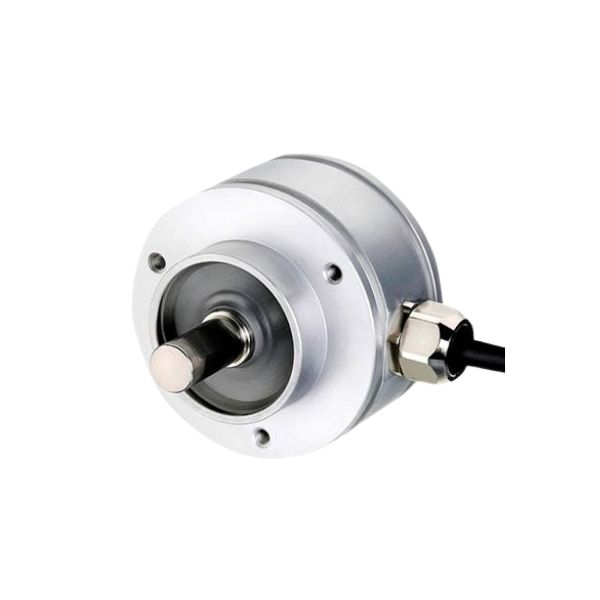
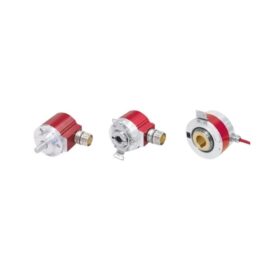
Magnetic absolute encoders use a multi-pole magnetic ring or disc target and magneto-resistive or Hall-effect sensors to determine absolute shaft position without physical contact. The non-contact sensing principle delivers absolute position data equivalent to optical types but with the contamination tolerance and mechanical robustness of magnetic technology. These encoders maintain reliable absolute position output through exposure to oil, grease, metal particles, dust, water splash, and condensation - conditions that compromise optical code disc systems. Operating temperature ranges extend to -40°C/+100°C. Single-turn resolutions typically reach 12 to 14 bits in standard magnetic absolute designs, with multi-turn versions using gear-based or energy-harvesting revolution counting also available. Output interfaces include SSI, CANopen, Profibus, and analogue options. Solid shaft and hollow shaft configurations in aluminium and stainless steel housings with IP67 or IP68 sealing are standard. Stainless steel designs with FDA-compliant seals suit food and pharmaceutical environments where chemical and hygiene requirements are strict. Magnetic absolute encoders are preferred for outdoor equipment, construction machinery, agricultural equipment, marine applications, mining machinery, and any industrial system where harsh environmental conditions make optical absolute encoders unreliable or short-lived. They are also widely specified as retrofit upgrades in applications where optical absolute encoders have experienced repeated contamination-related failures - improving system uptime at equivalent or lower lifecycle cost.