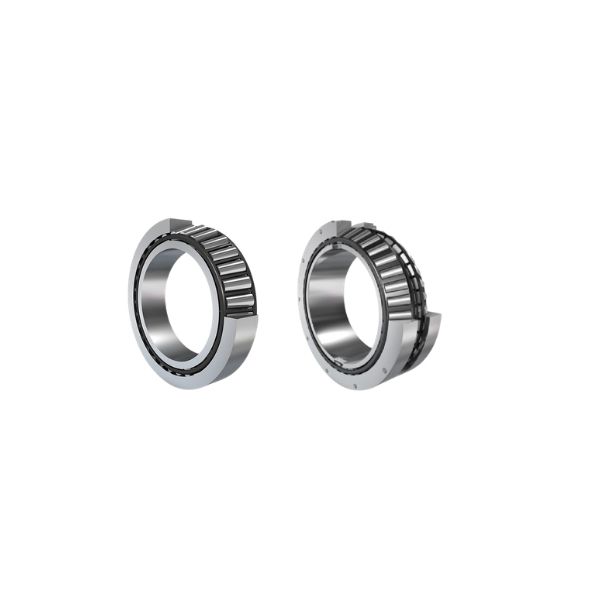
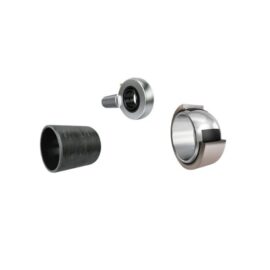
Tapered roller bearings have tapered (conical) inner and outer rings and conical rollers - all cones sharing a common apex point on the bearing axis. This geometry means radial loads generate an axial thrust component, requiring tapered roller bearings to operate in pairs adjusted against each other to control axial clearance or preload. The combined radial and axial load capacity makes tapered roller bearings indispensable in applications with complex, multi-directional loading. Single-row types handle predominantly radial loads with simultaneous moderate-to-high axial loads in one direction. Paired face-to-face arrangements support axial loads in both directions. Back-to-back arrangements provide higher moment load capacity. Four-row configurations for rolling mill work rolls handle extreme combined loads with high rigidity. Contact angle selection balances radial and axial load capacity - shallow angles handle predominantly radial loads; steeper angles support higher axial forces. Metric and inch series cover a wide range of shaft sizes. Preload and clearance adjustment during installation is critical to service life - incorrect preload is the primary cause of premature tapered roller bearing failure in service. Tapered roller bearings are specified in automotive wheel hubs and differentials, gearbox helical and bevel gear support, mine winder and crane wheel bearings, heavy rolling mill back-up rolls, construction and agricultural machinery, and large pump thrust bearings - wherever high combined radial and axial loads with long service life requirements must be met by a compact, proven solution.