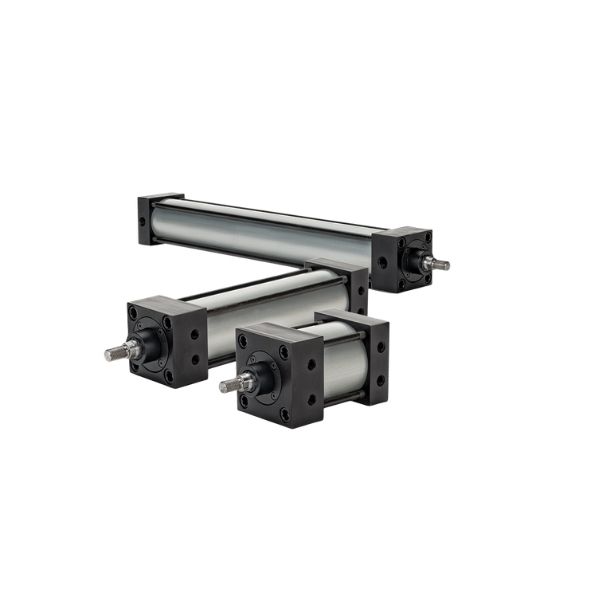
Pneumatic actuators convert compressed air pressure into linear or rotary mechanical motion. Double-acting cylinders use air pressure on both sides of the piston for positive control in both directions. Single-acting spring-return types use air for one direction and spring force for return - providing a fail-safe return to a known position on air loss. Rodless cylinder and guided slide designs extend the range to more complex motion paths. Pneumatic actuation delivers rapid cycle times - typical linear cylinder extension and retraction cycles under 100ms for short strokes - at a cost per cycle that is hard to match with electric alternatives. Force output is proportional to bore area and supply pressure - cylinders of 16mm to 320mm bore covering force ranges from 10N to over 100,000N at standard 6-bar supply. ISO 15552 and ISO 6432 standard cylinder dimensions ensure interchangeability between different manufacturer products. Proportional valves allow variable force and speed control. Position sensing using reed switches or Hall-effect sensors detects piston position for logic control without contact. Stainless steel rodless cylinders and food-grade seal options cover hygienic applications in food and pharmaceutical environments. Pneumatic actuators are the dominant motion element in automotive assembly lines, packaging machine clamping and sealing, conveyor sorting and diverting, food processing portioning and transfer, electronics assembly pick-and-place, injection moulding machine assists, and all high-cycle factory automation where speed, simplicity, and low cost per cycle are priorities.