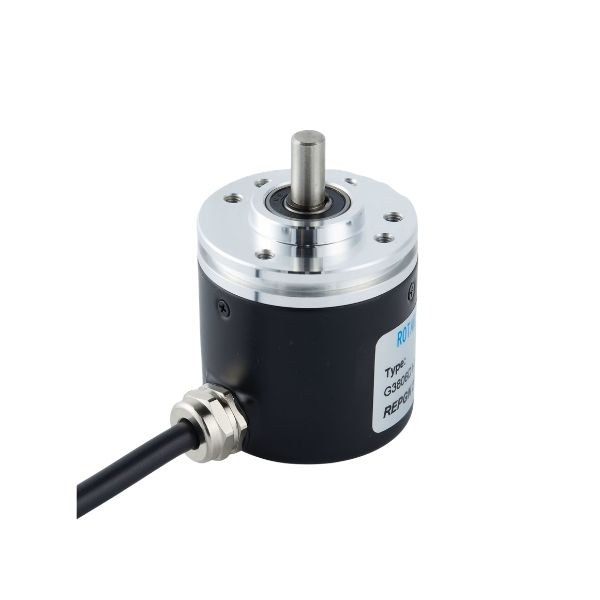
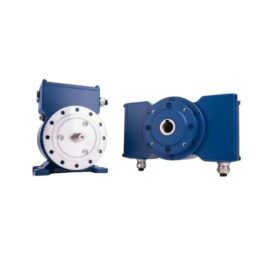
Optical absolute encoders use a precision multi-track glass or metal code disc with a dedicated light source and detector array for each bit of resolution. Each track contributes one bit to the absolute position word, so a 17-bit encoder has 17 parallel tracks read simultaneously by 17 detector elements. This produces an immediately available, unique position code for every shaft angle without requiring any shaft movement. High-resolution optical absolute encoders achieve 17 to 24 bits of single-turn resolution - equivalent to better than 0.001 degrees of angular resolution. Signal quality, edge accuracy, and position repeatability are superior to magnetic sensing, making optical absolute encoders the correct choice wherever measurement accuracy and resolution are primary requirements and the environment supports optical sensing. Gray code and binary outputs support parallel interfaces. SSI, CANopen, Profibus, Profinet, and EtherCAT variants enable fieldbus integration. Standard encoder mechanical construction applies - solid shaft, hollow shaft, aluminium or stainless steel housing, IP64 to IP67 sealing. Environments with heavy contamination, high vibration, or shaft runout should use magnetic absolute types instead. Optical absolute encoders are specified for CNC machine tool feedback, precision coordinate measuring machines, semiconductor wafer handling stages, medical imaging and scanning equipment, laser systems, and precision laboratory instruments where angular accuracy is a fundamental system-level requirement that cannot be compromised by the position resolution limitations of magnetic alternatives.