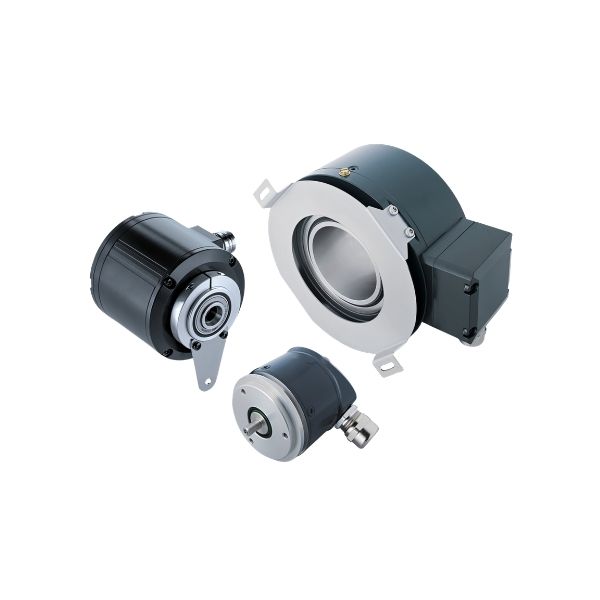
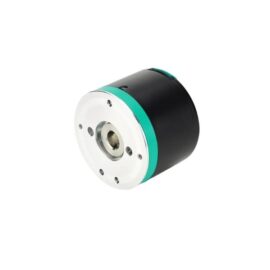
Heavy-duty absolute encoders combine the position-retention advantages of absolute encoding technology with the mechanical robustness required for the most demanding industrial environments. They are designed for applications where position must be known exactly at all times - including after power interruption - in environments characterised by vibration, shock, contamination, wide temperature extremes, and high shaft bearing loads. Mechanical construction features large-diameter shaft bearings rated for high radial and axial loads, reinforced cast aluminium or stainless steel housings, and heavy-duty cable gland or vibration-resistant connector systems. IP65 to IP67 sealing is standard; IP69K is available for high-pressure washdown. Shaft load capacity is typically 5-10 times higher than standard absolute encoder designs. Operating temperature range extends to -40°C/+100°C. Magnetic sensing is standard in most heavy-duty absolute designs due to superior contamination tolerance compared to optical alternatives. Single-turn resolutions up to 13 bits and multi-turn capability up to 12 additional bits are typical. Interface options include SSI, CANopen, Profibus, and HTL/TTL incremental emulation for legacy system compatibility. Heavy-duty absolute encoders are required for overhead crane travel and hoist positioning, steel plant rolling mill drives, mine hoist and winder position tracking, port crane boom and trolley positioning, cement kiln drive control, and any heavy industrial application where retained absolute position combined with extreme mechanical durability is the specification requirement. Standard absolute encoders used in these environments typically fail within weeks.