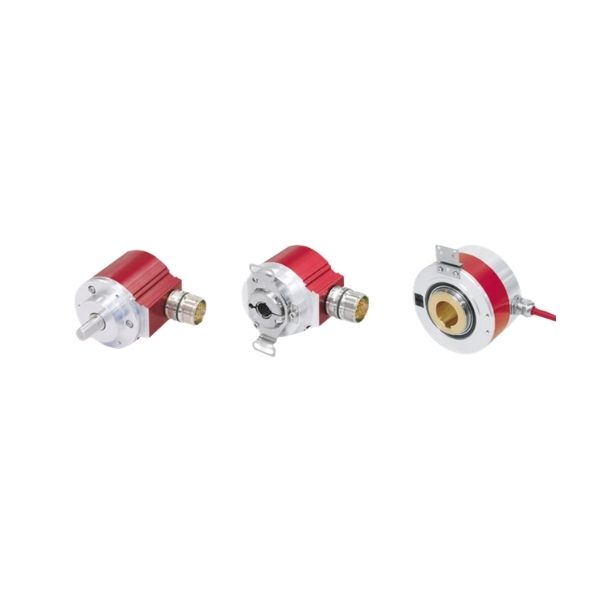
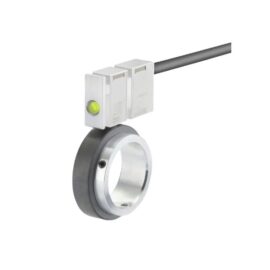
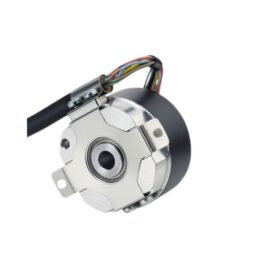
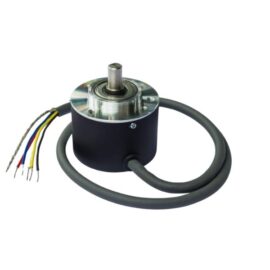
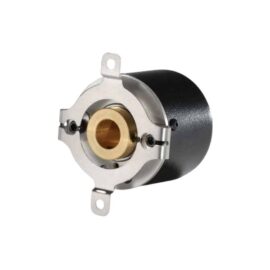
Programmable incremental encoders allow users to configure key parameters - resolution (PPR), output signal format, counting direction, and zero pulse width - directly in the field using a PC, dedicated programmer tool, or push-button interface. A single physical encoder model can replace a range of fixed-resolution types, dramatically simplifying spare parts management for OEM machine builders and maintenance teams managing diverse equipment fleets. Configuration is stored in non-volatile memory within the encoder, retained through power cycling and across the encoder service life. Resolution is commonly programmable from 1 to 65,536 PPR. Output formats are switchable between HTL, TTL/RS422, NPN, PNP, and push-pull. Some models allow direction reversal, hysteresis adjustment, and output phase settings to match specific controller input requirements without hardware changes. Physical construction follows standard incremental encoder designs: solid or hollow shaft, aluminium or stainless steel housing, IP65 to IP67 sealing. Internal sensing can be optical or magnetic depending on the target application environment. Connector types include M12, M23, and cable gland variants to match standard industrial installation requirements. Programmable encoders deliver the most value for OEM machine builders needing identical physical units across multiple machine variants with different resolution requirements, and for maintenance teams who want a single spare encoder configurable to replace multiple fixed-resolution types. They are also ideal for retrofit applications on older machinery where the original encoder specification is unknown or the part number has been discontinued.