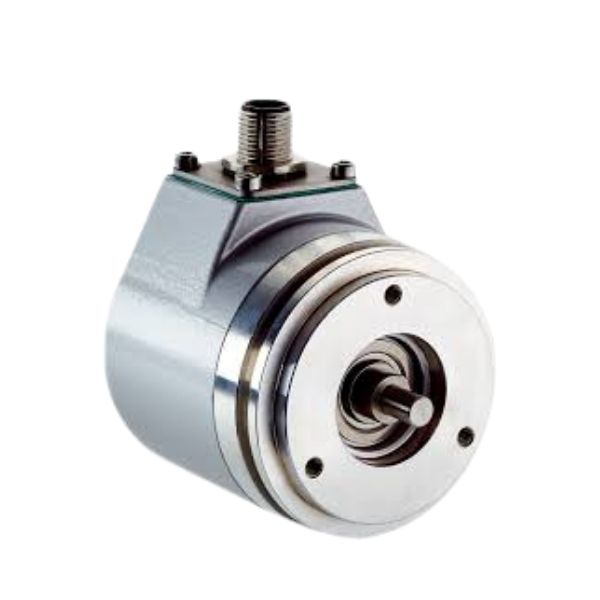
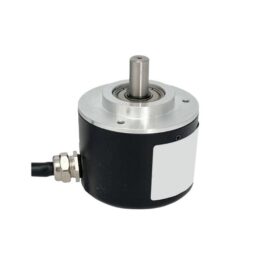
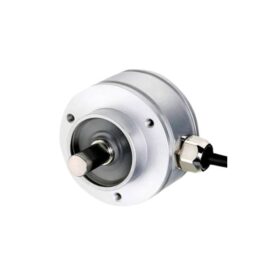
Programmable absolute encoders allow key operating parameters to be configured in the field rather than fixed at manufacture - single-turn resolution, multi-turn revolution range, counting direction, preset or zero offset position, and output protocol can all be set using a PC configuration tool, handheld programmer, or push-button interface built into the encoder housing. A single physical unit can therefore replace a wide range of fixed-configuration absolute encoders, which significantly simplifies spare parts management for OEM machine builders producing multiple machine variants and for maintenance teams supporting mixed equipment fleets. Configured settings are stored in non-volatile memory and are retained through power cycling for the operating life of the encoder. Resolution is commonly programmable up to 17-bit single-turn with multi-turn ranges configurable in software rather than fixed gearing. Output protocol is typically switchable between SSI, CANopen, Profibus, Profinet, and EtherCAT, allowing one encoder model to serve multiple fieldbus environments without a hardware change. Physical construction follows standard absolute encoder practice: solid or hollow shaft mounting, optical or magnetic internal sensing depending on the target environment, aluminium or stainless steel housing, and IP65 to IP67 sealing. Programmable absolute encoders deliver the greatest value for OEMs standardising on one encoder platform across several machine models with different resolution or protocol requirements, and for plants seeking to reduce the number of distinct absolute encoder spares held in inventory across multiple production lines.