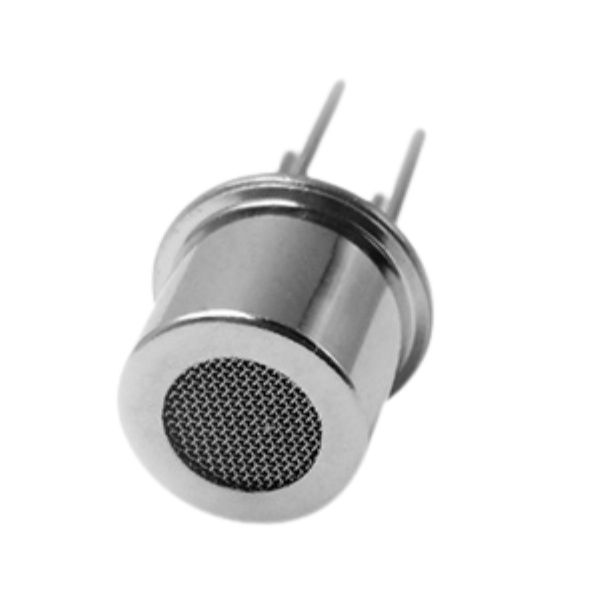
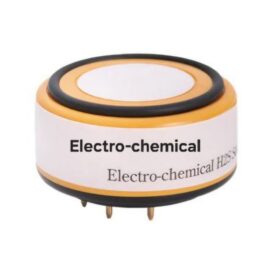
Semiconductor gas sensors - also called metal oxide gas sensors (MOS) or resistive gas sensors - detect gases by measuring the change in electrical resistance of a heated metal oxide semiconductor material when exposed to target gases. The most common materials are tin dioxide (SnO2) and zinc oxide (ZnO) doped with trace catalysts that sensitise the material to specific gas families. The resistance change is large - often several orders of magnitude - providing a sensitive detection principle. The broad cross-reactivity is simultaneously the technology's advantage and its limitation. MOS sensors are sensitive to a wide range of reducing gases - hydrocarbons, CO, hydrogen, alcohols, solvents - at low concentrations, making them versatile general-purpose gas presence detectors. However, they cannot discriminate between different gases within the family they detect, and they are affected by humidity and background gas composition changes. For applications requiring specific gas identification and quantitative measurement, electrochemical or IR sensors are preferred. MOS sensors consume low power, are very compact, and are manufactured at lower cost compared to electrochemical and IR alternatives. Operating temperature and humidity ranges must be considered, as performance degrades at high humidity in some designs. Semiconductor sensors are widely used in domestic and industrial gas alarms, indoor air quality and CO2 surrogate sensors, automobile cabin air quality systems, industrial odour and VOC presence monitors, food freshness sensing, and any application where general gas presence indication at low cost is more important than gas-specific quantitative measurement.