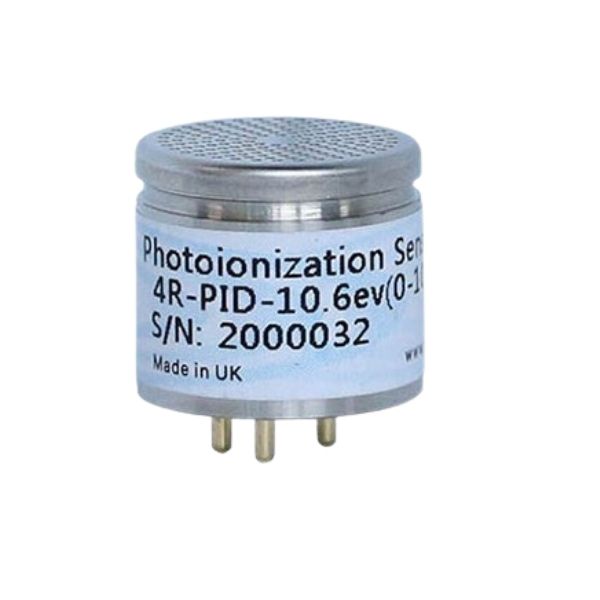
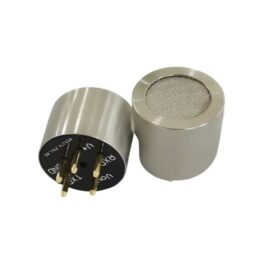
Photoionization detector (PID) sensors detect volatile organic compounds (VOCs) and certain inorganic gases by exposing the gas sample to high-energy ultraviolet light. Molecules with ionisation energies below the UV photon energy absorb the photon and become ionised - generating a small current proportional to VOC concentration. The current is amplified and presented as a concentration reading in ppm. The key advantage of PID technology is extreme sensitivity - VOC detection in the low ppb (parts per billion) range is achievable - combined with fast response times under one second. No sensor material is consumed during measurement, providing a long, stable service life unlike electrochemical sensors. The PID responds to a very broad range of organic compounds - making it an excellent general-purpose VOC screener for safety and hygiene monitoring applications. PID sensors do not respond to methane, natural gas, or CO2 - limiting cross-sensitivity with common non-VOC gases. UV lamp energy (typically 10.6eV or 11.7eV) determines which compounds are detectable. Lamp windows require periodic cleaning to prevent UV transmission degradation from contamination deposits. PID sensors are specified for paint spray booth VOC monitoring, solvent storage and use area safety, industrial hygiene personal monitors, confined space VOC screening, soil and groundwater contamination assessment, chemical plant fence-line monitoring, and pharmaceutical and laboratory environments where trace solvent vapour detection is required for both safety compliance and occupational exposure monitoring.