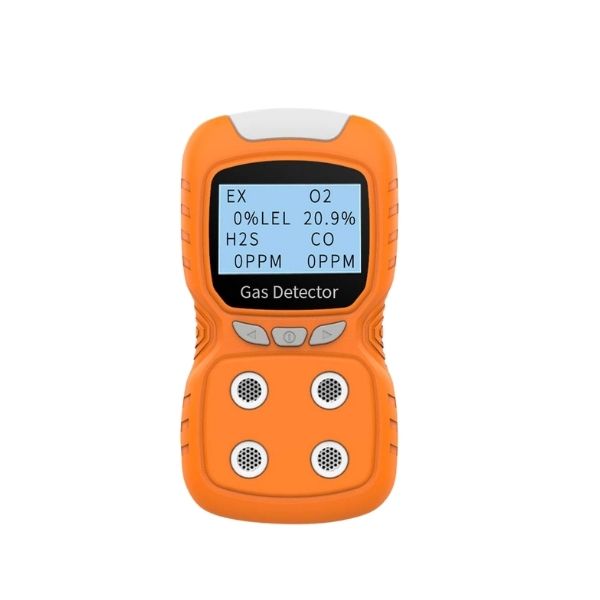
Portable gas detectors are battery-powered handheld or body-worn instruments allowing workers to carry personal gas monitoring wherever they work. They are the essential personal protection tool for confined space entry, maintenance activities in potentially gas-contaminated areas, emergency response operations, plant inspection rounds, and any task taking workers into atmospheres where gas hazards may be present intermittently or unpredictably. Modern portable detectors are multi-gas capable - typically monitoring 4 to 6 gases simultaneously in a single compact instrument. Common four-gas combinations include oxygen (O2), flammable gas (% LEL), carbon monoxide (CO), and hydrogen sulphide (H2S) - covering the four most common atmospheric hazards in confined spaces and general industry. Visual, audible, and vibration alarms ensure hazard awareness even in noisy or high-distraction environments. Pump-aspirated versions draw a gas sample from a distance through a sampling tube - essential for testing an atmosphere before entry, as confined space pre-entry testing requires a representative sample from within the space without physically entering it. Data logging records time-stamped gas concentration readings for post-incident analysis and occupational health surveillance records. Portable gas detectors are required equipment for confined space entry teams, plant maintenance personnel in petrochemical and chemical facilities, emergency response teams, utility workers in gas distribution and wastewater infrastructure, mine rescue teams, and any workforce performing tasks in environments where unexpected gas release could create an immediate health or explosion hazard. Bump testing before each use and regular calibration are essential maintenance requirements.